Civic feature
Crossroads to city
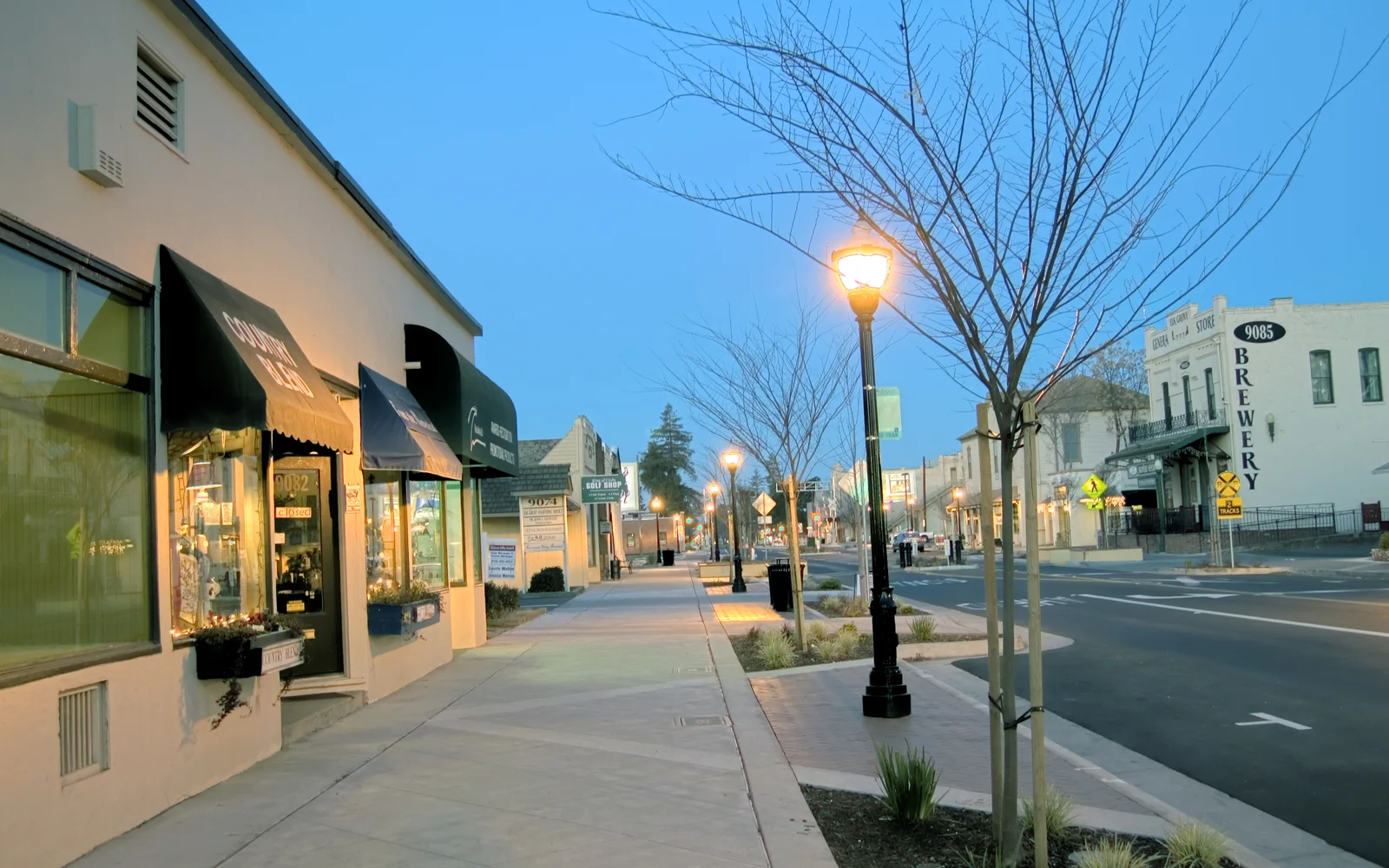

Elk Grove did not begin as a continuous wave of subdivisions. The City’s own community profile traces the place to an 1850 hotel and stage stop. Its location south of Sacramento made it a working crossroads for mail, business, agriculture, and people moving through the region. That origin matters because it explains why the old commercial spine and surrounding rural landscape still feel different from the newer neighborhoods farther west and south.
The railroad added another organizing line. A City cultural-resources study describes how the eventual town site took shape after rail construction, how the Elk Grove Building Company incorporated in 1876, and how development included stores, hotels, and a steam-powered flour mill. The record is a useful reminder that the community was built around practical exchange long before modern municipal boundaries existed.
Agriculture remained the durable background. Farms, dairies, vineyards, cattle, and row crops supported local life while Sacramento expanded nearby. Elk Grove stayed relatively independent of the capital’s outward growth until housing and retail development accelerated during the 1980s. The contrast between an older rural-commercial center and later suburban districts is therefore part of one local timeline, not two unrelated towns.
Incorporation arrived in 2000, after the rural-commercial center and later suburban districts had already established visibly different building and street patterns. That chronology can help a resident organize questions about construction and alterations, but it does not establish any household’s insurance result.
A useful property record separates known facts from impressions. Keep permits, dated photographs, contractor invoices, system ages, occupancy details, and a current belongings inventory together. Record additions and major repairs when they occur. For vehicles, retain driver, mileage, use, garaging, and financing changes rather than trying to infer them from the surrounding district.
Today’s Old Town preserves a visible piece of that chronology. Storefronts, the street grid, and the railroad relationship make it possible to read a different development pattern than one finds around later master-planned areas. A useful resident file follows the same discipline: note when a structure was built or altered, what systems were replaced, how it is occupied, and which records support those facts.
Travel patterns may affect vehicle use, while household changes may affect property or life-insurance needs. Those are questions for verified mileage, drivers, occupancy, and financial responsibilities—not assumptions drawn from a city history.
The insurance connection is recordkeeping. A fast-growing city contains old buildings, newer construction, changing households, and vehicles used in different ways. California’s Department of Insurance advises consumers to inventory possessions and understand policy terms. That is a stronger basis for review than any generalized story about growth: document the actual home, belongings, use, and limits, then let the issued contract control.