Civic feature
Farm and oak country
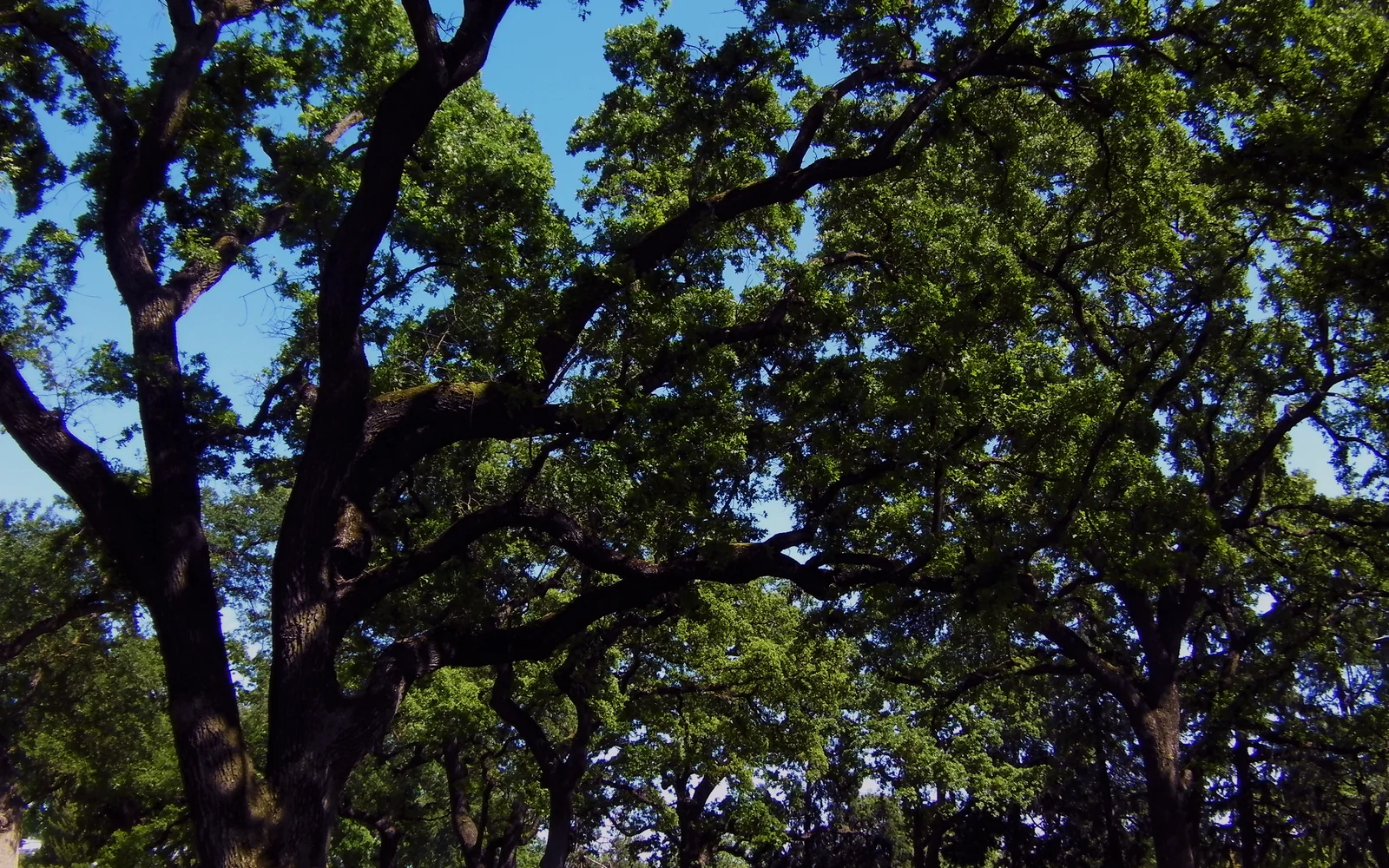

Elk Grove’s agricultural history is not merely decorative branding. The City’s General Plan says Elk Grove remained a small agricultural community until the late 1980s. It also records that livestock, vineyards, orchards, and row crops remain present within the broader planning area. Working land and urban neighborhoods therefore meet along real edges.
That history helps explain the landscape. The community remained comparatively small until rapid development began late in the twentieth century. Earlier low-density patterns filled in over time, while rural roads, large parcels, fields, and mature trees remained part of the local setting. The broad oak canopy at Elk Grove Regional Park is one visible reminder of a landscape that predates many surrounding subdivisions.
The City’s agriculture policies seek both continuity and clearer expectations. They call for celebrating farming heritage, protecting agricultural land when appropriate, recognizing the right of existing agricultural uses to continue, and using buffers or graduated lot sizes where suitable. The City also notes that accepted agricultural activity can bring noise, dust, or odors near residential uses.
Those planning facts are important for a buyer or resident to understand, but they do not decide an insurance application. The relevant questions concern the actual parcel and activity: Is land being cultivated? Are animals kept? Are there detached structures, equipment, stored materials, employees, customers, or a business purpose? A standard household description may not capture a working agricultural exposure or a separate commercial interest.
Even without farming activity, a household file benefits from attention to site details. Trees, fences, sheds, irrigation, drainage, roofs, electrical work, and fuel storage can change over time. Photographs and receipts make it easier to explain what exists and when it was installed or maintained. Records should distinguish routine yard care from an income-producing or specialized use.
The proximity to Sacramento and Central Valley agriculture also creates varied vehicle patterns. One household may commute on regional roads, another may work locally, and another may use a vehicle for farm or business tasks. Auto applications depend on verified drivers, garaging, annual use, ownership, and purpose. A regional label cannot supply those facts.
The insurance connection is classification. California’s Department of Insurance advises consumers to give complete, accurate information and review coverage as circumstances change. A rural edge, a heritage oak, or a nearby field does not automatically determine a result. Describe the property, structures, vehicles, occupancy, and activities accurately; disclose material changes; and read the issued policy and endorsements to see what is included, limited, or excluded.
For renewal, compare the written property description with current land use and improvements. A once-accurate application can become incomplete when structures, animals, equipment, tenancy, or business activity change.